Most people who ask about starting a spray foam business have never seen a real workday on a rig. Here's an hour-by-hour look at what a typical residential day looks like for a two-person crew in the field.
6:00 AM — Pre-Job Prep
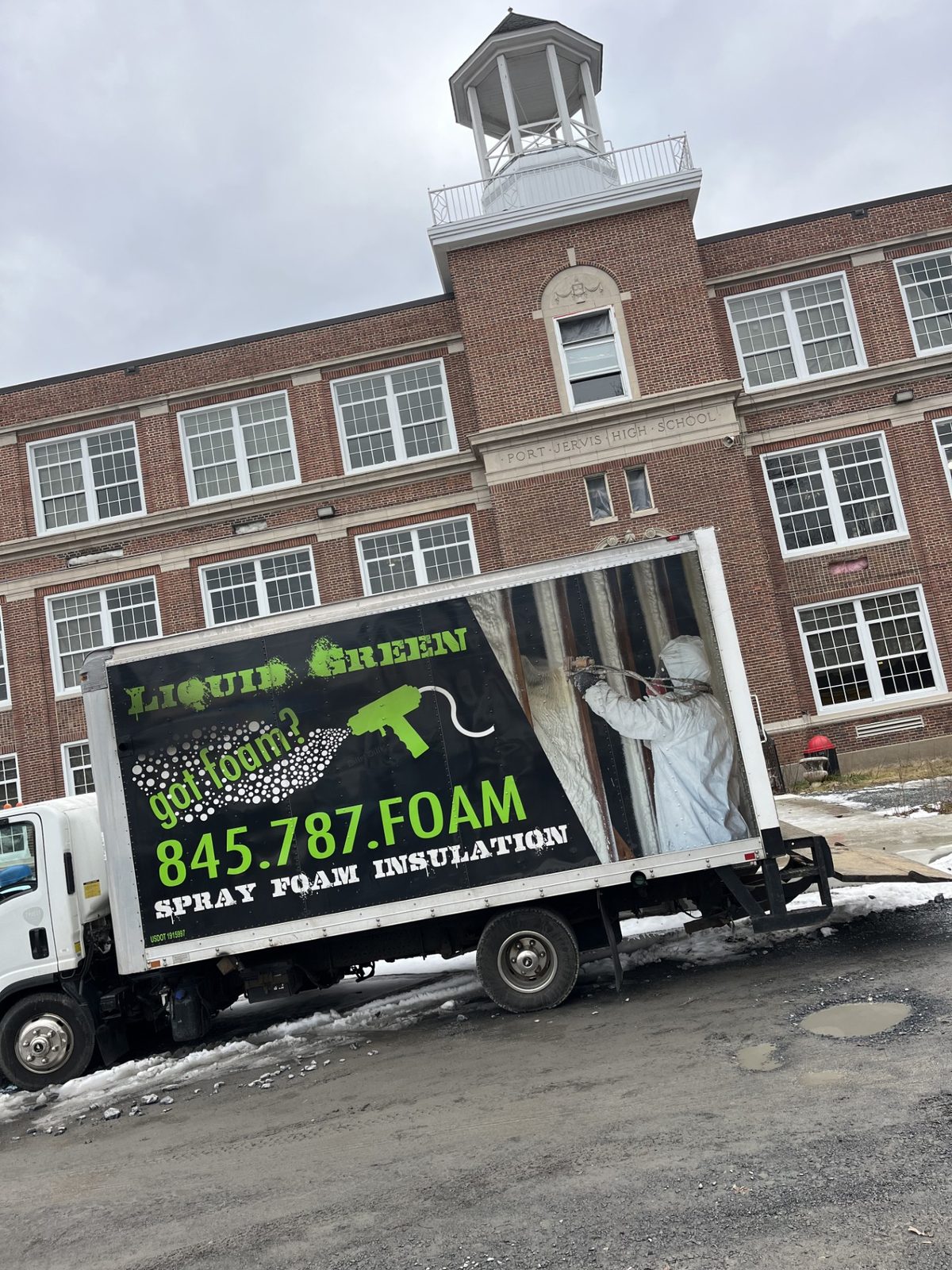
The day starts in the yard. The rig — the truck or trailer with the proportioner, hoses, and spray gun — gets a walkaround. Oil, fuel, drum levels, and hose connections get checked. Drum heaters kick on so the chemicals are at temperature. PPE is laid out: Tyvek suit, hood, respirator cartridges, gloves, and boots.
By 6:30 the crew is on the road with a route already mapped. Drive time to the first job can be 15 minutes or 90, depending on the service area. Traffic is part of the job.
7:30 AM — On-Site Setup
Arriving on the jobsite, the first 30 to 45 minutes go to setup before any foam is sprayed. The crew walks the site with the homeowner or builder, confirms the scope, and checks for anything that has changed since the bid. Windows, doors, and finished surfaces get masked. HVAC returns, light fixtures, and any sensitive areas get covered.
The rig is parked, hoses are run, and the proportioner is brought up to temperature and pressure. A test spray confirms the chemical mix is correct. Setup is not optional, and it is what separates a clean job from a callback.
8:00 AM — The Spray
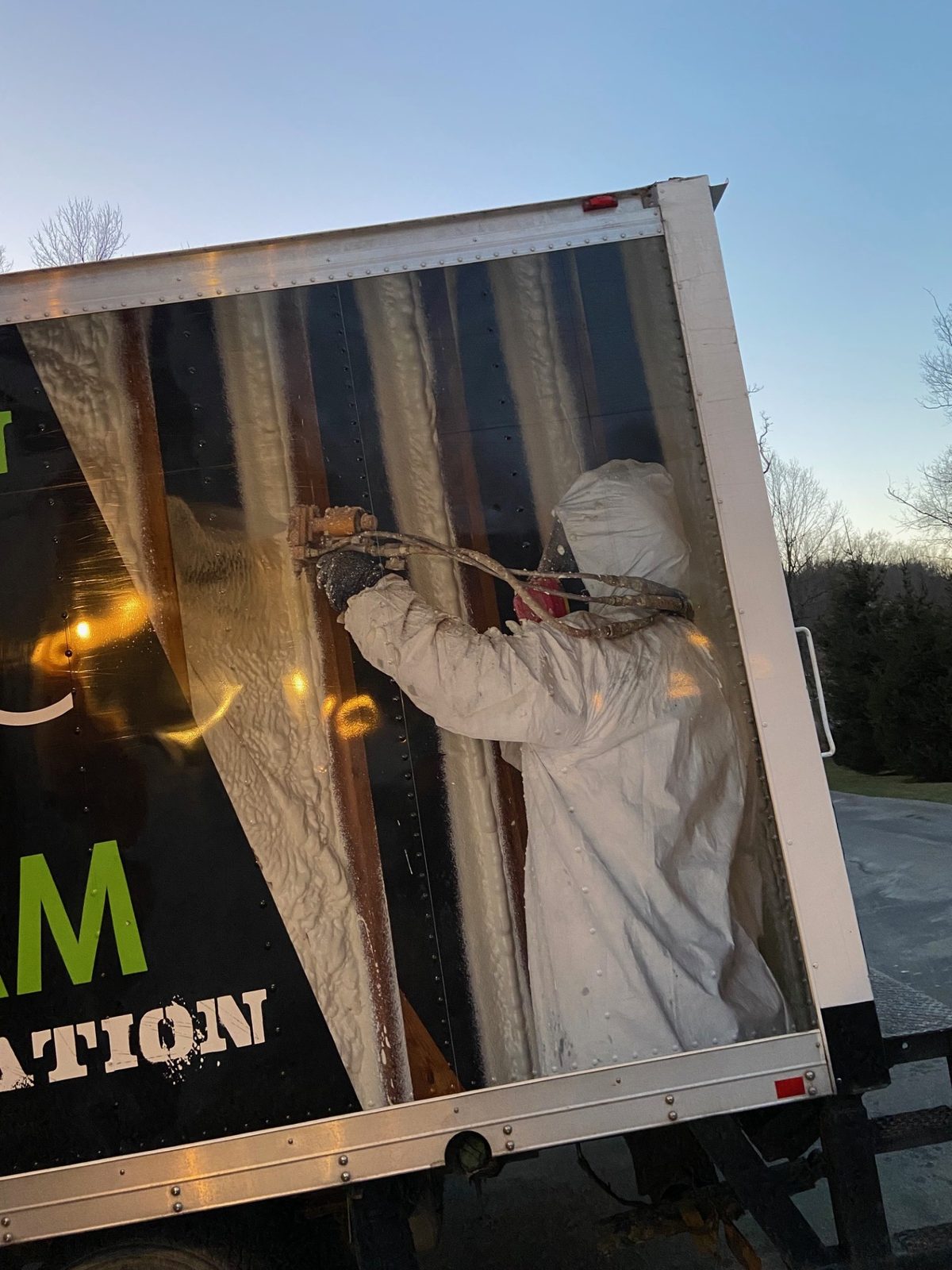
Now the actual work begins. A typical residential package — attic, rim joist, or a wall cavity — runs 2 to 5 hours of spray time, depending on size and depth. The applicator wears full PPE the entire time: hood, respirator, suit, and gloves. The assistant manages hose and monitors drum levels.
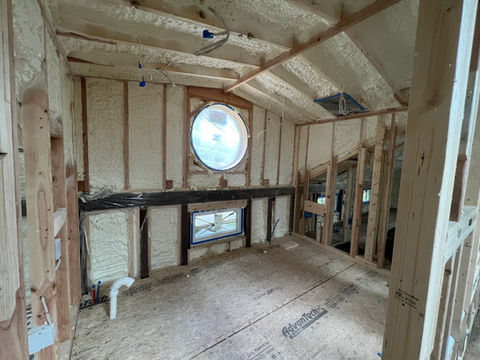
Technique matters. Pass thickness is monitored so the foam cures correctly. The applicator moves methodically through the assembly, building up to the target R-value without over-spraying or leaving voids. Closed cell goes on thinner, in tighter passes. Open cell expands aggressively and is more forgiving on irregular cavities. Once the foam is cured enough to walk on, the applicator does a quick visual pass to catch any misses.
11:00 AM — Demobilize and Drive
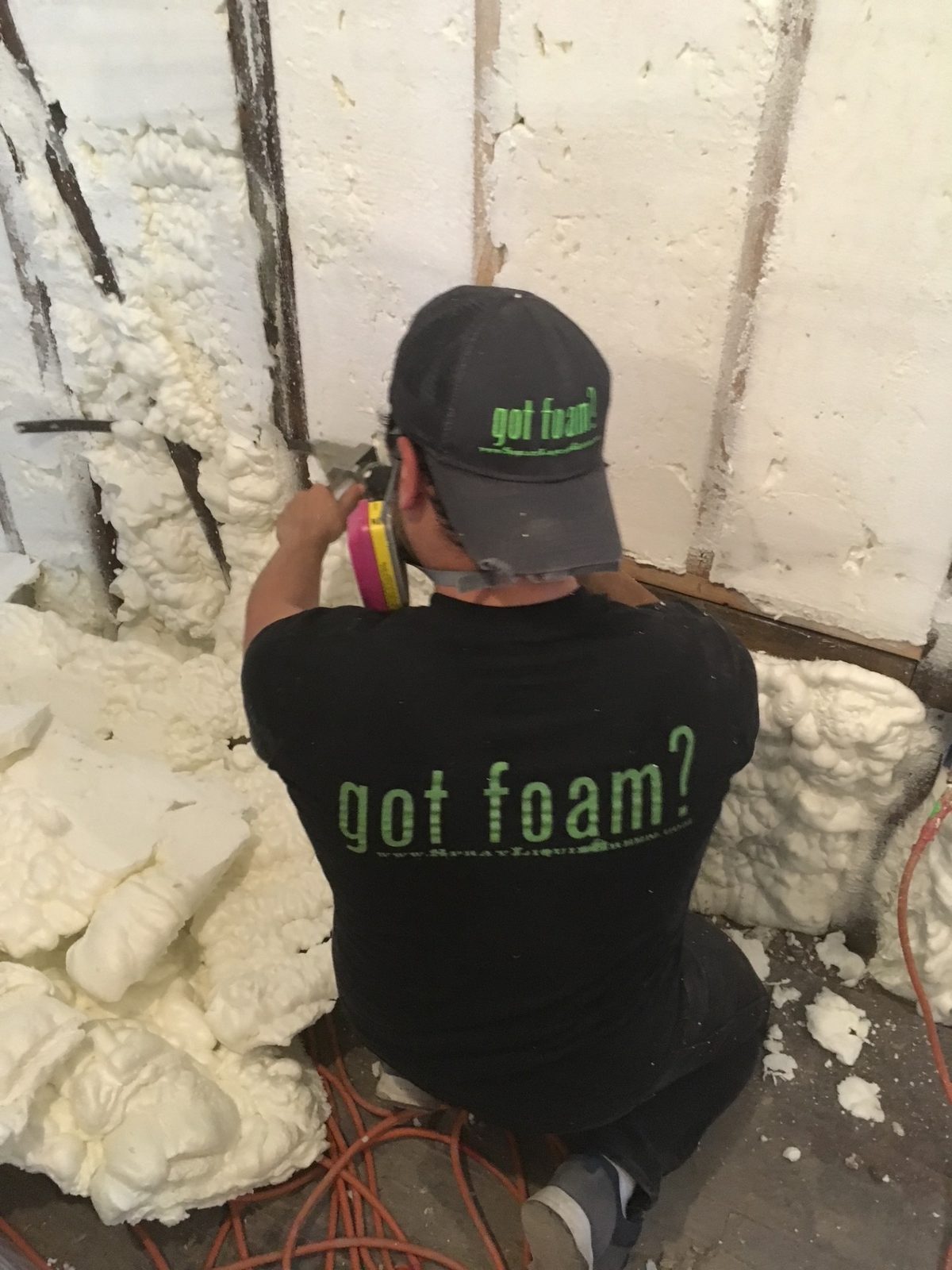
By late morning the spray is done. The crew masks down, cleans the work area, breaks down the rig, and loads the equipment. Demobilize takes 30 to 60 minutes, longer if the site is tight.
From there, the crew either heads back to base for drum changes and a midday reset, or drives straight to the next job if the schedule has them stacked. Driving a spray foam truck is a skill on its own — high center of gravity, long wheelbase, and constant awareness of what is in the back.
12:30 PM — Lunch + CRM Update
Lunch is the natural break, but it is also when the business work happens. Most operators spend 30 to 60 minutes each day on the non-spray side of the business: updating job status in the CRM, following up on quotes, returning calls, and scheduling the next week. For solo owners early on, this is the only time the office work gets done, and where the difference between a busy contractor and a profitable one usually shows up. Quotes that go out fast win jobs. Quotes that sit for two days lose them.
2:00 PM — Second Job or Estimate Visit
The afternoon usually goes one of two ways. If the morning job was a smaller package, the crew runs a second spray job, repeating the setup, spray, and demobilize cycle. If the morning job filled the day, the afternoon is for estimates. Estimate visits are a different kind of work: the operator walks the property, measures the assemblies, talks through the scope with the customer, and writes the bid on the spot or within 24 hours. This is where spray foam outperforms other insulation in the customer's mind, so the conversation matters.
5:00 PM — End of Day
By late afternoon, the crew is back at the yard. The rig gets parked, drums get topped off if needed, and the truck gets a quick inspection for the next morning. Tomorrow's route is confirmed, materials are staged, and any open quotes are written up before the operator heads home. Most spray foam operators are not working at 9 PM. The work is physical, and the day ends when the rig is parked.
How Days Vary
Not every day looks like the one above. A few factors change the shape of the workday.
- Seasonality. Demand peaks in warmer months and dips in deep winter. Cold mornings extend job times and may restrict the product sprayed.
- New construction vs. retrofit. New builds run on the builder's schedule with a defined scope. Retrofits in occupied homes require more masking and more customer interaction.
- Residential vs. commercial. Commercial jobs often involve larger assemblies, more prep, and more trades on site.
- Job size. A small rim joist package finishes by 11 AM. A whole-house package fills the full day.
What Changes as You Grow
The shape of the day shifts as the business grows, and operators who plan for that shift scale more cleanly.
- First solo operator. You do everything: spraying, marketing, quoting, billing, admin. Long days and lots of windshield time.
- First crew member. You start to specialize. You might run the gun while the crew member handles setup. You still quote your own work.
- First hired crew. You move into a sales and QC role. Mornings are estimates, afternoons are spot checks on the active job.
- Multi-crew operation. You run routes and review numbers, not spraying. The day looks more like an operations manager than a tradesperson, which is the goal.
The Non-Spray Work That Matters
Here is the part most people underestimate. A real spray foam job day is not 100% spraying. By most estimates, only about 70% of the operator's time is on the gun or directly supporting the spray. The other 30% is quoting, marketing, follow-up, accounting, and customer service.
That 30% is unglamorous, but it drives profitability. A crew that quotes fast and follows up consistently will outpace a more skilled competitor who takes three days to send a proposal. For anyone considering a spray foam franchise, this is the biggest reason systems and training matter: they turn the unglamorous 30% into a repeatable process instead of a daily grind.
Conclusion: A Real Day Is Mostly Routine
A real spray foam job day is structured, physical, and predictable once you have done it a few times. The morning is prep and travel, mid-morning is the spray, midday is admin, afternoon is a second job or estimates, and end of day is planning for tomorrow.
If you are evaluating this as a career, the day is more orderly than it looks from the outside. The skills that matter are not just spraying — they are bidding, follow-up, and consistency. The crews that do those well keep their rigs full year-round.