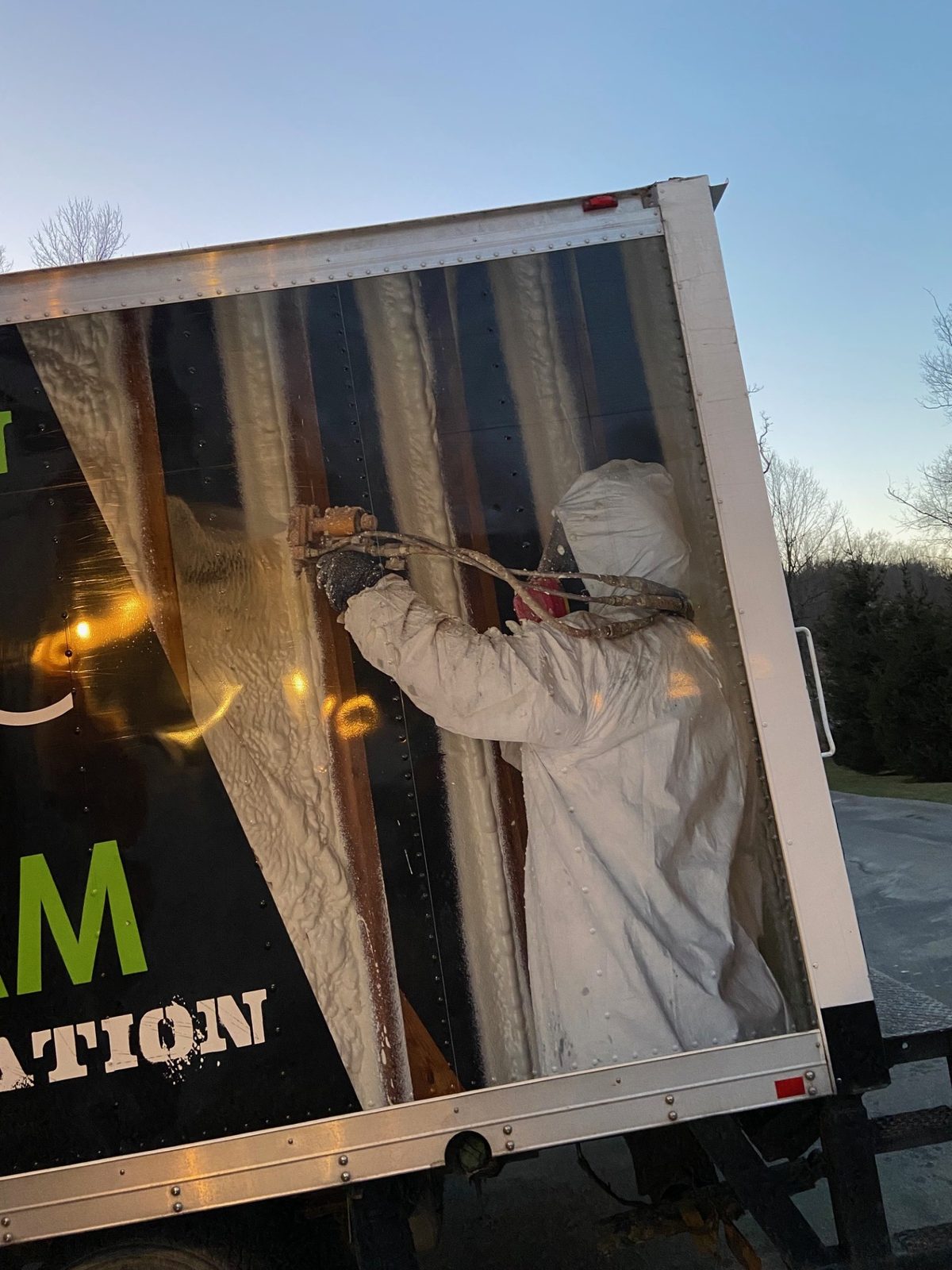
The Commercial Opportunity
Commercial contracts are where the larger numbers show up. A single warehouse or retail buildout can price out at several times the value of a typical residential job, and ongoing relationships with general contractors keep work flowing without the marketing spend required to chase individual homeowners. The catch is that commercial work is also where bid mistakes and missed specifications cost real money. The operators who do well here are the ones who build the estimating and compliance habits before they need them, not after the first big job goes sideways.
Common Commercial Building Types
The label "commercial" covers a lot of ground. The categories most often served by spray foam operators include offices, retail stores, restaurants, warehouses, light industrial facilities, agricultural buildings, institutional facilities like schools and municipal buildings, and pre-engineered metal buildings and pole barns. Each category has its own code requirements, its own preferred assemblies, and its own decision-maker. A retail build-out is driven by a store planner. An agricultural project is driven by a farmer who wants a building that will not sweat. Knowing who you are talking to changes how you bid.
What's Different From Residential
On a residential job, you often deal with a homeowner who wants to feel comfortable with you. On a commercial job, you are dealing with a general contractor, a property manager, or an architect, and they care about specs, schedules, and liability. Scale changes too. A typical attic might take half a day. A warehouse roof deck can take three to four days with a full crew. Specifications are tighter, drawings are more detailed, and the work has to pass inspection by people who have seen every shortcut. Treat commercial as a different service line, not a scaled-up residential job.
Closed Cell Dominates Commercial
Closed-cell spray foam is the workhorse of commercial work for three reasons. It acts as a vapor barrier in a single application, which is a code requirement on many cold-side assemblies. It adds racking strength to walls and contributes to the structural performance of metal buildings. And it achieves required R-values at a thinner depth than open-cell, which matters when wall cavities or roof assemblies are tight. Open-cell still has its place in interior partitions and certain sound-control applications, but most commercial bid invitations you receive will specify closed-cell for a reason.
Typical Commercial Projects
The most common commercial jobs in any given market are metal building insulation, warehouse insulation, agricultural buildings, and either retrofit or new-construction work. Metal buildings are a sweet spot for spray foam because the envelope is hard to air-seal with traditional materials, and closed-cell foam solves that in one pass. Agricultural buildings, including poultry houses, dairy barns, and equipment storage, drive large-volume demand in rural markets. Retrofit work on existing commercial buildings tends to pay a premium because the prep work is more involved, but it also has more hidden risk.
Working With General Contractors
Most commercial spray foam work flows through general contractors, not direct building owners. That means you need to be invited to bid, which usually starts with prequalification: a W-9, an insurance certificate, a list of past projects, and often a safety record. Once you are on a contractor's bid list, scheduling becomes a coordination exercise. The general contractor tells you when the building will be ready, and you work around the electricians, the plumbers, and the HVAC subs. Change orders are common, and the contractor who documents them clearly is the one who keeps the margin.
Code and Specification
Commercial work is governed by a different set of codes than residential. The International Energy Conservation Code, or IECC, sets commercial R-value and air-sealing requirements. ASHRAE 90.1 is the energy standard most architects reference in their specifications. NFPA 285 governs exterior wall assemblies that include combustible materials like foam plastic. Before you bid, ask for the project specifications and confirm that the foam assembly you are proposing has the tested listings the architect is asking for. Skipping that step is one of the most common ways spray foam subs lose money on commercial jobs.
Estimating Commercial Work
Residential is often priced per board foot or per square foot of area. Commercial work uses the same units, but the math is different. Specifications drive minimum thickness, assemblies drive waste, and access drives setup time. Always build a waste factor into the estimate. A clean metal building might run a 10 percent waste factor. A retrofit with curved surfaces and existing obstructions might run 20 percent or more. The crews that consistently hit their estimates are the ones who treat waste as a line item, not a rounding error buried inside the material cost.
Crew Size, Equipment, and Insurance
A typical residential rig runs with a two-person crew. Commercial work often needs three or more, including a sprayer, a helper at the rig, and sometimes a second sprayer for large roof decks. Equipment requirements can scale too, with heated hoses and higher-output proportioners becoming common on warehouse and metal building projects. Insurance is another place where commercial work diverges from residential. General contractors typically require higher general liability limits, workers' comp coverage, and sometimes umbrella policies, and the certificates have to be issued correctly to specific entities as additional insureds.
When to Add Commercial
The right time to add commercial is once your residential operation is running smoothly and you have a few months of consistent revenue, repeat customers, and clean jobs behind you. Jumping into commercial before you have a track record costs you the ability to bid confidently. The infrastructure you need, including higher insurance limits, a larger crew, and the ability to be on a contractor's bid list, costs more to set up and is harder to maintain if your schedule is empty. Treat commercial as the second chapter of the business, not the first.
Key point: Commercial work is where the larger contracts live, but the bid mistakes are larger too. The operators who win consistently are the ones who build estimating, scheduling, and compliance habits before they need them.