Why New Operators Underprice
The pattern shows up again and again. A new operator wants to win work to build a portfolio, so they price aggressively against established contractors. They also do not know their true costs because they have not tracked enough jobs yet, and they treat material cost as the only line item. Some skip profit margin entirely. The result is a stream of low-margin jobs that look like revenue but do not fund the business. According to industry guidance for new spray foam operators, underpricing is consistently cited as a leading reason new businesses stall before they ever take off.
The Cost Stack
Every spray foam bid is built from the same stack of costs. Materials: the chemical sets, the rig, and the consumables. Labor: the crew hours on the job, plus drive time and setup. Equipment: depreciation on the proportioner, the generator, the truck or trailer, the hoses, and the spray gun. Fuel for the truck and the rig. Insurance: general liability and workers' comp. Overhead: software, marketing, office, and accounting. And finally, your profit margin, the line that keeps the business alive. Miss any one of them and the bid is too low, no matter how busy you stay.
Calculate Your True Cost Per Job
Before you can price a job, you need to know what a job costs you. Pull your last ten jobs and add up materials, labor hours, equipment depreciation, and travel. Divide by the revenue. That number is your real cost as a percentage of revenue. Trade sources commonly cite gross margins near 50 percent for established contractors, which means the cost stack should not exceed about half the bid. If your number is higher, you do not have a bidding problem, you have a cost problem, and the fix starts before the next estimate goes out the door.
Measure the Job Correctly
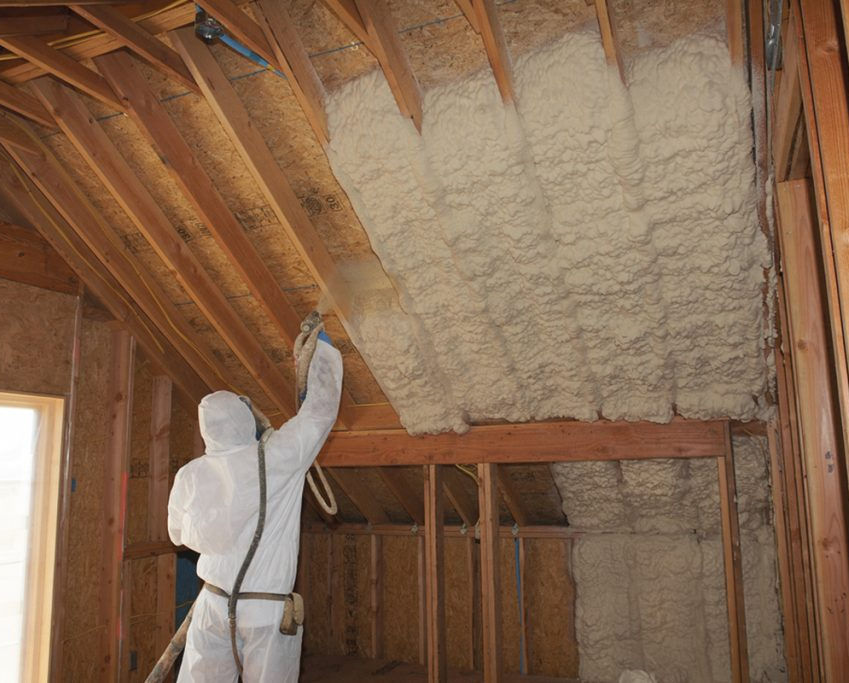
The math starts with a clean measurement. Square footage of the area to be sprayed, multiplied by the depth of foam required in inches, gives you the board feet you need to install. Add the waste factor. Subtract any areas that will not be sprayed, like windows and doors. For closed-cell, depth is often driven by code, typically 3 to 5 inches in walls and 5 to 6 inches on rooflines. For open-cell, the depth is usually larger. The crews that bid fastest have a measurement routine they follow on every site visit, with photos and notes that survive the drive back to the office.
The Waste Factor
A 10 to 20 percent waste factor is normal for spray foam. The lower end applies to clean new construction with regular framing. The higher end applies to retrofits, curved surfaces, metal building purlins and girts, and any job where overspray and trimming eat into the yield. Treat waste as a budget line, not an afterthought. If you under-budget waste, your profit disappears into the chemical drum, and you will wonder why the job felt like work but the bank account did not move.
Add Your Margin
Margin is not a luxury. It pays for the next rig, the slow months, the bad debt, and the eventual sale of the business. Trade sources commonly cite about 50 percent gross margin and 25 percent net margin for established spray foam contractors, but those are benchmarks, not guarantees. A simple rule: never bid a job where your margin is so thin that one mistake wipes out the profit. Build a minimum margin into your bid template and refuse to go below it, no matter how much you want the work.
Build a Bid Template
The fastest way to underprice is to bid from memory. A bid template, which is a single form you fill out for every job, makes the cost stack visible and the math repeatable. It should include every line item: materials at current pricing, labor at your loaded hourly rate, travel, setup, cleanup, waste factor, overhead allocation, and margin. When the same form runs through every job, you stop forgetting line items, and your bids stop drifting. A template also makes it easier to compare actual job performance to the estimate later.
Common Bidding Mistakes
The mistakes that drain margin are remarkably consistent. Forgetting travel time. Ignoring setup and cleanup. Bidding on a square-foot basis without checking the depth. Skipping the waste factor. Adding a small percentage "just in case" instead of building a real margin. And the worst of all, bidding low to win. Every one of those mistakes is fixable, but only if you can see them, which is why the bid template matters. If you keep losing money on jobs, the first question to ask is which line item you forgot.
When to Walk Away
Walking away is a feature, not a failure. Bid the job, run the math, and if the number does not cover your cost stack plus margin, send a polite decline. The customers who will only buy on price are the customers who will drain your weekends and your bank account. The customers who pay a fair price for good work are the ones you want, and they tend to find you when you stop chasing the ones who do not. A full pipeline at low margin is worse than a thin pipeline at the right margin.
The Cost of Winning Bad Bids
A bad bid does not just cost you the job's profit. It trains the customer to expect that number on the next one. It also trains your team to think that the work is worth what you charged, which is the wrong lesson. A crew that finishes a job underpriced often feels good about the speed, but the books show the truth. The compounding effect over a year of low-margin jobs is what separates operators who grow from operators who burn out. Protect the price, and the price protects the schedule.
Tracking Job Performance
Bidding is a feedback loop. After every job, compare what you estimated to what actually happened. How much chemical did you use? How many labor hours? What was the real travel time? Where did the waste actually go? After twenty tracked jobs, you will see patterns. Some bid types are reliably under-priced. Some are over-priced. Most are close. The data makes the next bid more accurate, and the cycle keeps improving. Operators who track improve. Operators who do not, repeat the same mistakes with new customers.
Key point: Bidding is not about winning every job. It is about winning the right jobs at a price that funds the business you are trying to build.