Open cell and closed cell spray foam look similar at the gun, but they perform very differently. Here's a plain-English breakdown of the two types, where each one wins, and how to pick the right one for the job.
Open Cell Spray Foam
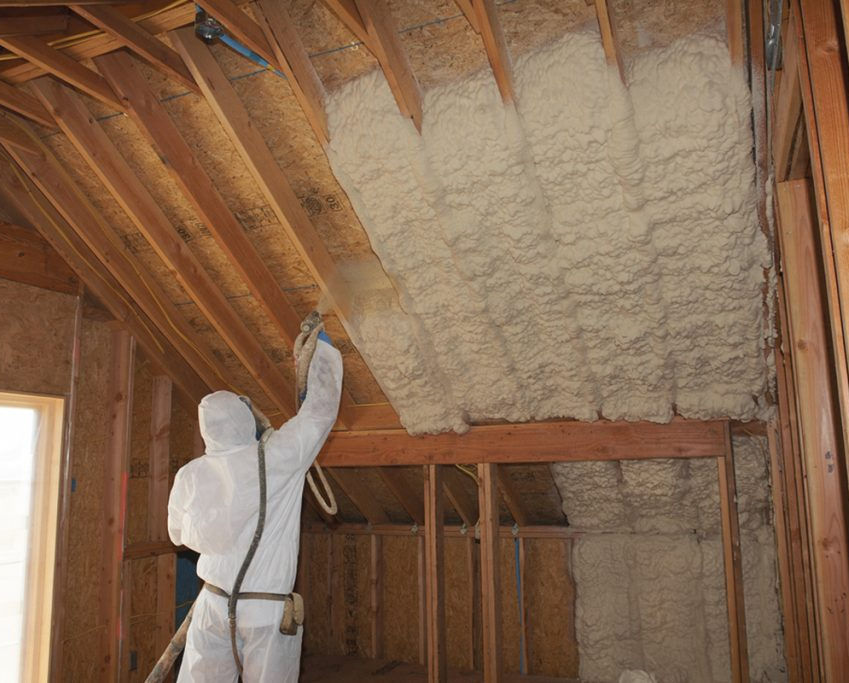
Open cell spray foam is the lighter, softer half of the family. Its cells are intentionally left open, which is where the name comes from, and the cured foam has a spongy, almost bread-like feel. The standard product, which most operators spray most of the time, is a 0.5 lb/ft³ density half-pound foam.
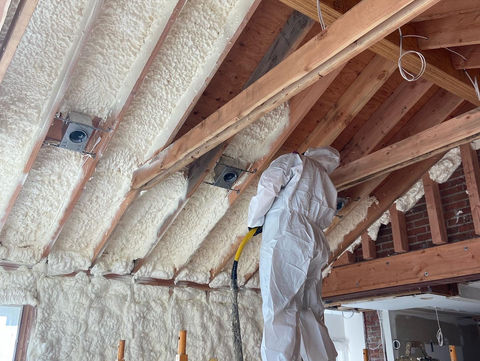
The open cells give it a moderate R-value of roughly 3.5 to 3.7 per inch. By itself that sounds low compared to closed cell, but the foam also delivers excellent air sealing and very good sound dampening, so it often performs better in a real building than the bare number suggests. The cells are vapor-permeable, which means moisture can move through the foam instead of being trapped behind it — a feature in most interior applications.
Open cell is the right call for interior walls, attic floors where you don't need a vapor barrier, between floors for sound control, and any cavity where the foam is fully enclosed on both sides. Because the foam expands a lot, it fills irregular cavities and seals around penetrations. It also costs less per board foot than closed cell, which matters on a large attic.
Closed Cell Spray Foam
Closed cell spray foam is the dense, rigid version. Its cells are closed and packed tightly, which gives the cured foam a hard, structural feel. The standard product is a 2 lb/ft³ medium-density foam, roughly four times the mass of open cell per cubic foot.
That density pays off in insulation performance. Closed cell delivers an R-value of about 6 to 7 per inch, almost double open cell, and the closed-cell structure also makes it a class II vapor retarder at typical installed thicknesses. In many jurisdictions, that means you don't need a separate vapor barrier on the warm side of the wall.
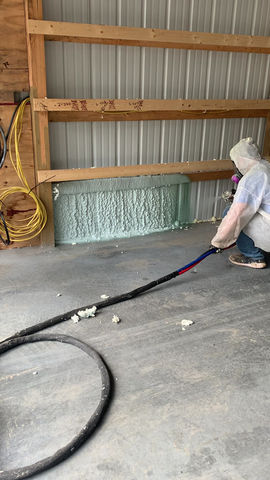
The rigidity isn't just a tactile property. Closed cell adds meaningful racking strength to wall assemblies and can contribute to the structural performance of the building envelope. It's the right call for exterior walls that need a high R-value in a thin cavity, basements, rim joists, metal buildings, pole barns, and unvented cathedral ceilings.
Side-by-Side Comparison
| Property | Open Cell | Closed Cell |
|---|---|---|
| Density | ~0.5 lb/ft³ | ~2 lb/ft³ |
| R-value per inch | ~3.5–3.7 | ~6–7 |
| Vapor permeability | Vapor-permeable | Class II vapor retarder |
| Structural contribution | Minimal | Adds racking strength |
| Sound dampening | Excellent | Good |
| Cost per board foot | Lower | Higher |
| Typical applications | Interior walls, attics, between floors | Exterior walls, rim joists, basements, metal buildings |
Where Each One Wins
The product choice almost always comes down to the assembly and the code climate zone, not personal preference. Here is a quick map of where each product tends to fit best.
- Vented attic floor — open cell. You get air sealing and R-value in a vapor-permeable assembly that can dry toward the attic.
- Exterior walls (above grade) — closed cell when you need a vapor retarder in a thin cavity; open cell when the wall is deeper and sound control matters.
- Basement walls (below grade) — closed cell. The closed structure handles moisture drive and condensation without needing a separate vapor barrier.
- Rim joists — closed cell. Cold, often uninsulated, and prone to air leakage. Closed cell handles all three at once.
- Unvented cathedral ceilings — closed cell. You need a vapor retarder and a high R-value in a thin assembly with no room to ventilate.
- Metal buildings and pole barns — closed cell. The foam adheres to metal, provides a thermal break, and adds rigidity to the envelope.
Cost Implications
Open cell is cheaper per board foot, but board feet isn't the only number that matters. If your code target is R-40 in a roof, open cell needs about 11 inches of foam while closed cell only needs about 6. At that point the open cell job uses more material, takes more passes, and labor cost rises with every pass.
Closed cell installed correctly is the more expensive product per job in most cases, but per-assembly cost comes closer when you factor in the eliminated vapor barrier, fewer passes, and the structural benefit. The honest answer is to bid both ways and let the customer choose based on the assembly, the climate zone, and their budget.
How to Choose
Four questions will usually settle the product choice on any given job. The answer drives everything from material cost to bid price.
- What is the climate zone? Colder zones push you toward closed cell in exterior assemblies to control vapor drive from the warm side to the cold side.
- What is the assembly? Below-grade, unvented, and rim joist assemblies call for closed cell. Vented attic floors and interior cavities work well with open cell.
- What is the budget? If the bid is tight, open cell in vented assemblies gives the most R-value per dollar and keeps the job moving.
- What does the local code require? Many jurisdictions specify a class II vapor retarder on the warm side of exterior walls. Closed cell satisfies that in one step.
Key point: The right product is the one the assembly needs. Climate zone, code, and moisture drive all matter more than which foam your contractor happens to have on the truck.
What This Means for Franchisees
A mobile spray foam rig carries both products on the truck, so franchisees can quote either on any given job. The proportioner, hoses, and spray guns are set up to run both formulations — changeover between open and closed is mostly a drum swap and a temperature adjustment on the heated hoses.
Training covers the application differences. Closed cell goes on thinner, doesn't expand as much, and rewards a more controlled technique with consistent pass thickness. Open cell is more forgiving on irregular cavities and fills aggressively on the first pass. The same crew can run both in a single day, which means more bids accepted and more revenue per truck. Independent operators often default to one product because that is what they learned first, which leaves money on the table.
Conclusion: Pick by Assembly and Code, Not by Default
Open cell and closed cell are not competitors. They are two different tools for two different jobs, and the best operators pick the right tool for the assembly, the climate, and the code. Customers who understand that — or whose contractor explains it to them — get the best result. The ones who default to whichever is cheaper, or whichever their contractor has on the truck, usually end up either overpaying or under-spec'd.
If you are a contractor looking to add a high-margin product line or a homeowner trying to make sense of two very different quotes, the framing is the same: ask which product the assembly actually needs, and let the answer drive the bid.