Why the Decision Deserves a Framework
Not all spray foam franchise opportunities are built the same. Some are founder-led with deep operational experience, transparent fees, and real training. Others are glossy sales decks with vague cost ranges and unverified income claims. The right one is the one whose numbers, structure, and culture match your market and your capital.
The framework below is the same one we use when prospective operators evaluate Liquid Green, applied to any system you might be comparing.
Start With the Franchise Disclosure Document
Every federally registered franchise is required to give you a Franchise Disclosure Document, the FDD, at least 14 days before you sign a binding agreement. The FDD has 23 numbered items, and a few of them carry most of the weight.
- Item 5: Initial fees — what you pay up front for the right to operate.
- Item 6: Other fees — royalties, marketing funds, technology fees, and what they buy.
- Item 7: Estimated total initial investment — the all-in cost to open your doors.
- Item 19: Financial performance representation, if any. Treat as a benchmark, not a promise.
- Item 22: Contracts, including territory, renewal, termination, and dispute resolution.
Read every page. The FDD is the single most important document in the process.
Total Startup Investment
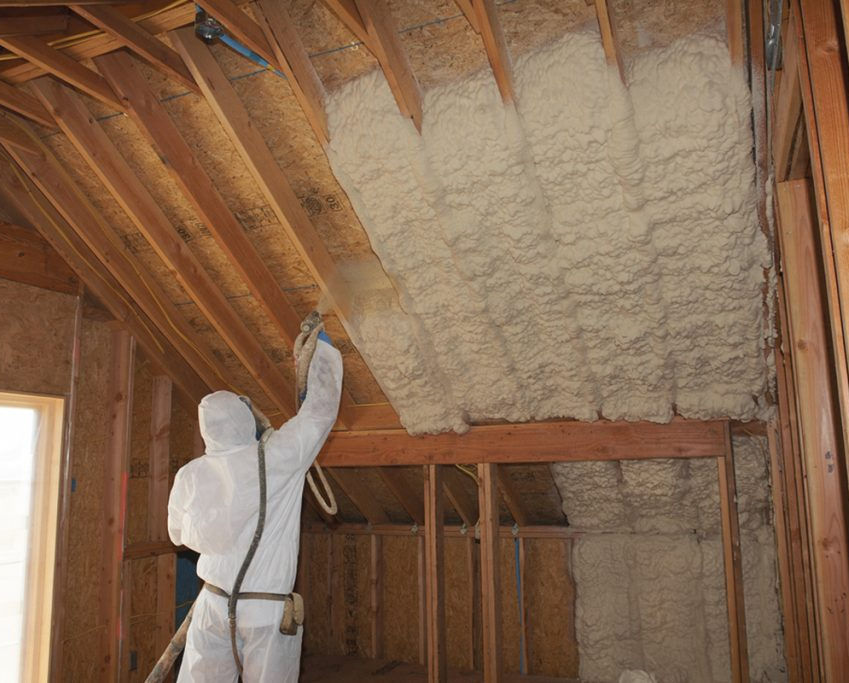
Spray foam is a relatively capital-light business compared to many trades, but the equipment package is still the biggest line item. Independent startup guides put total capital between roughly $54,000 and $109,000, driven by your rig, materials, and working capital.
Ask for a line-item breakdown that separates equipment, initial materials, training, travel, insurance, licensing, marketing launch, and three to six months of working capital. A franchisor that hands you a single bundled number is one that does not want you to look too closely.
Training and Onboarding
Spray foam is a learnable skill, but the gap between a profitable crew and an unprofitable one is mostly technique and bidding — exactly what the training program should close.
Ask how many hours of classroom training you receive, how many are hands-on with a real rig, and how long until your first solo job. Then ask about ongoing support: coaching calls, ride-alongs, and access to technical help when a job goes sideways.
Ongoing Fees and What They Buy
Royalties and marketing fund contributions are normal — they are how a franchise system pays for the support you receive. The question is whether what you get back is worth what you pay.
Read Item 6 of the FDD for the exact percentages, then ask how the marketing fund is spent and what the royalty specifically pays for. Royalty rates in the spray foam space typically run in the single digits, but the real comparison is the value of the support behind them.
Territory Model
A protected territory is one of the most important things a franchise system offers. Without it, the franchisor could open a competing location down the street.
Ask how territories are defined — by zip code, county, radius, or population — and how large a population that gives you. Ask whether you can buy additional territory as you grow, and whether the franchisor reserves the right to sell through your market to national accounts.
Brand Strength and Marketing
Brand recognition is part of what you are buying. Search the brand in your target market and look at reviews, social channels, and paid presence — the marketing the franchisor does for itself is a preview of what they will do for you.
Equipment Package
The rig is the operational backbone of the business. Ask exactly what brand and model of proportioner, hose, spray gun, compressor, and generator come in the package. Then ask about expected service life, warranty coverage, and how parts and service are handled in your region. Vague answers usually mean a generic, lowest-bid package.
CRM, Technology, and Operations
Modern spray foam operations run on software: lead intake, quoting, scheduling, route planning, customer follow-up, and review requests. Ask whether a CRM is included, what platform it is on, and who maintains it.
Item 19: Read It Carefully
Item 19 of the FDD is the franchisor's financial performance representation, if they choose to provide one. Under the FTC Franchise Rule, this is the only place a franchisor is allowed to make specific statements about franchisee revenue or profit. Be cautious of any franchise that quotes you revenue or profit numbers during the sales process that are not in Item 19. Revenue is not profit, and any number should be treated as a benchmark, not a promise.
Key point: Plan for a range on payback, not a single date. Spray foam margins are real, but your results depend on your market, your bidding discipline, and how well you control waste.
Red Flags to Watch For
- Vague cost ranges. If the all-in number is fuzzy, the rest of the disclosure probably is too.
- No protected territory. Without one, you are paying for a brand and competing with the people who sold it to you.
- High-pressure sales tactics. "This territory is going fast" is a sales technique, not a fact.
- Revenue or earnings claims outside Item 19. A serious franchisor does not need them.
- Hidden or open-ended fees. Read every recurring charge before you sign.
Green Flags Worth Their Weight
- Transparent, itemized fees. Everything on the page, including the things you would rather not pay.
- Founder-led or operator-led systems. People who have actually run a spray foam business make better partners.
- Real, hands-on training. Classroom plus a real rig plus real jobs before you go solo.
- Ground-floor or early-stage markets. Easier to build, less competition from other operators.
- No revenue claims. The system is sold on its operational merits, not on a number.
Questions to Bring to Discovery
Walk into every discovery day with a written list. The questions below consistently reveal the most.
- Send me the FDD before I sign anything.
- What is the itemized startup cost in Item 7?
- What are the royalty, marketing fund, and tech fees in Item 6?
- How is the territory defined, and what is the population?
- What is in the equipment package, by brand and model?
- How many hours of training, and how is it structured?
- What ongoing support do I get after launch?
- Can I have a list of current and former franchisees to call?
- What does Item 19 say, in plain English?
- What is the renewal term, and what are the conditions?
- What is the franchisee churn rate, and what were the most common reasons for closure?
Talking to Existing Franchisees
The single best source of truth is the franchisor's own franchisees. Item 20 of the FDD lists them. Call at least five — a mix of recent, established, and former — and ask the unfiltered questions about support, billing, and surprises. A strong system will produce the same answer five times.
Putting It All Together
The right spray foam franchise is the one whose disclosures are clean, whose support is real, whose territory is yours, and whose leadership is honest about the work. For a closer look at how Liquid Green handles each of these points, start with the franchise overview and bring your list.