Texas — Spray Foam Insulation Territory Opportunities
Texas territory opportunities for the Liquid Green Spray Foam franchise cover the Lone Star State — Houston, Dallas-Fort Worth, Austin, San Antonio, and the surrounding metros. A hot-climate spray foam insulation market with multi-unit investment scale and a structural home efficiency and green construction tailwind.
Why Texas Is a Strong Market for Spray Foam Insulation
Texas is the second-largest state in the U.S. by both population and land area, with approximately 30 million residents spread across a high-growth, pro-business economy. The state runs on its own power grid — the Electric Reliability Council of Texas (ERCOT) — has no state income tax, and consistently ranks at the top nationally for new construction starts. For a spray foam insulation franchise, the math is straightforward: more houses means more insulation work, and Texas builds more houses than anywhere else in America.
The territory opportunities in Texas break into four major metros. Houston, Dallas-Fort Worth, Austin, and San Antonio each represent multi-county franchise territories on their own. Layer them together and you have a statewide opportunity that few franchise systems have the operating model to cover. The hot Texas climate is a structural advantage: spray foam insulation delivers some of the highest R-value per inch of any residential insulation, which translates directly into lower cooling load. With most of the state sitting in IECC climate zones 2A through 3B, the code pulls in the same direction: tighter envelopes, higher R-values, less air infiltration.
Texas is also a year-round install window — no winter slowdown, no freeze-thaw gap, no spring rain delay. That is rare in the spray foam insulation industry and a real advantage for an operator scaling across metros. Industry estimates put U.S. spray foam insulation demand growth at high single digits year over year; Texas sits on the upper end of that curve.
Construction Opportunities for Spray Foam Insulation in Texas
The construction opportunities for spray foam insulation in Texas are the largest in the country. Texas consistently leads the U.S. in single-family housing permits. Dallas-Fort Worth, Houston, Austin, and San Antonio all sit in the top ten U.S. metros for housing starts year after year, and the pace of new residential construction has stayed strong. For a spray foam insulation operator, that is the foundation of the work: builders specify insulation in the plans, and open-cell and closed-cell foam are the products of choice.
The construction opportunities in Texas span every project type. New build subdivisions, master-planned communities, custom homes on the perimeter, multifamily, light commercial, warehouse, retail, self-storage, and agricultural outbuildings — each is a working channel for a Texas spray foam insulation franchise. Energy code adoption follows the International Energy Conservation Code (IECC), and most major Texas cities have adopted recent versions, which lifts the baseline for insulation performance. The result is more code-driven demand for high-R-value spray foam insulation in new construction, not just retrofits.
The retrofit channel is equally strong. Texas's housing stock has a large pre-1990 inventory, and the post-Uri and post-Beryl rebuild cycle is still feeding work across Houston, the Gulf Coast, and the interior counties. The construction opportunities for spray foam insulation installations in Texas scale with the operator and the protected territory. No state income tax and a pro-development regulatory climate make Texas a builder-friendly market for spray foam insulation construction opportunities.
Home Efficiency & Green Construction Demand in Texas
The home efficiency tailwind in Texas is shaped by climate and grid reality, not by state income tax credits — and it is the largest structural driver of new investment in the spray foam insulation industry in the state. The ERCOT grid was tested brutally during Winter Storm Uri in February 2021, when millions lost power for days in a deep freeze, and again during Hurricane Beryl in July 2024. Both events pushed home efficiency, weatherization, and home hardening to the top of the homeowner priority list.
Cooling load is the second tailwind, and it is year-round. Texas summers push air-conditioning systems to their limits, and spray foam insulation seals the building envelope, reduces air infiltration, and cuts the cooling load on the HVAC equipment. For a homeowner in Houston, Austin, or San Antonio, the home efficiency and green construction savings on a foam-insulated attic or wall assembly are real and measurable. Most of the state sits in IECC climate zones 2A through 3B; the residential building code follows the 2021 IECC with state amendments, and many major Texas cities have adopted stretch-code insulation requirements that pull spray foam insulation into the spec on new construction.
On the federal side, the Energy Efficient Home Improvement Credit (Section 25E) allows homeowners to claim a portion of qualifying spray foam insulation expenses. The home efficiency and green construction tailwind in Texas is structural — driven by cooling load, grid resilience after Uri and Beryl, and code. Green building standards and green construction specifications across Texas institutions point at spray foam insulation as a high-performance solution.
Job Opportunities Created by a Texas Spray Foam Franchise
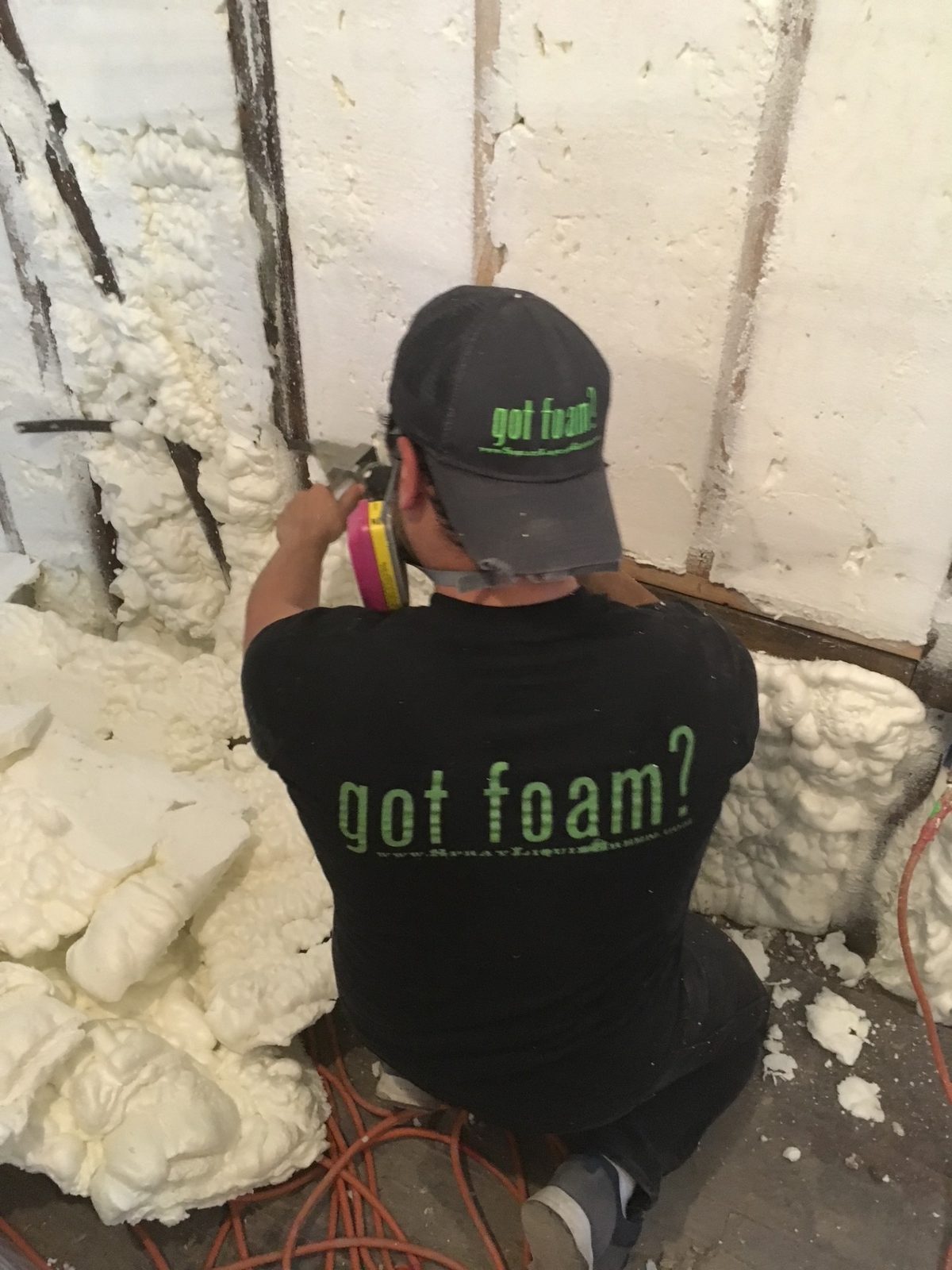
A Texas spray foam insulation franchise creates job opportunities in every metro and on every crew. The work is spray foam insulation installed in homes, schools, commercial buildings, warehouses, agricultural structures, and retrofits. The crews are local, the hires are local, the customers are local. Operators hire in their own communities, train through the Liquid Green Spray Academy, and serve neighbors. The job opportunities for applicators, estimators, and operations support are year-round and scale with the territory. Each new spray foam insulation installation is also a direct contribution to home efficiency and green building in the operator's community.
Job opportunities in Texas scale with the development. A single territory operator hires spray foam insulation technicians, a crew lead, an estimator, and office support as the business grows. A statewide build-out adds regional managers, dispatch, sub-franchisee support roles, and recruiting capacity. The roles are skilled trades positions, full-time and year-round, with on-the-job training through the Spray Academy. Pay is above the local average, and the job opportunities compound as the operator adds trucks, crews, and new construction opportunities.
The job opportunities for applicators in Texas are accessible. A spray foam insulation branch does not require a four-year degree. The 20-hour Spray Academy covers the technical side; the 1–2 week HQ onboarding at Brewster covers the operational side. No prior spray foam insulation or construction experience is required. The franchise investment is also a community investment — stable job opportunities for local people, in local homes, schools, and businesses.
Investment & What's Included in a Texas Territory
The total startup investment for a Texas spray foam insulation territory ranges from $136,000 to $194,000 per the current FDD. That investment covers the franchise fee, the mobile spray foam rig, equipment, initial inventory, training, and 90 days of working capital — a complete operating system, not just a brand license. Treat the investment as a planning range; actual startup cost varies by operator, equipment mix, and vehicle.
The high end of the investment covers a fully-spec'd rig and a larger initial chemical inventory; the low end covers a leaner launch. Either way, the all-in investment is below what most major insulation franchises require, and the operating system is the same one the Brewster flagship runs on. Liquid Green's fee structure is transparent: no hidden marketing co-op deductions, no required national ad-spend tiers. The home efficiency and green construction tailwind means the operator is selling into structural demand. Plan the investment as a benchmark, not a promise; results vary by operator and market.
No prior spray foam insulation experience is required. The 20-hour Spray Academy covers the technical side: equipment, application, safety, code. The 1–2 week HQ onboarding at Brewster covers the operational side: rig setup, scheduling, customer acquisition, builder relationships, and the first jobs. The home efficiency, green construction, and construction opportunities in Texas are the tailwind; the operating system and the investment package are the launch pad. The full Item 7 cost breakdown lives in the Franchise Kit — request it and book a 30-minute call. The full FDD is shared after the call.
Texas — Common Questions
How much does a Liquid Green franchise cost in Texas?
Initial investment is $136,000 to $194,000 all-in for a Texas spray foam insulation territory. That investment covers the franchise fee, the mobile spray foam rig, equipment, initial inventory, the 20-hour Liquid Green Spray Academy, the 1–2 week HQ onboarding at Brewster NY, brand assets, and working capital. Treat the investment range as a planning benchmark — actual startup cost varies by rig configuration, equipment mix, and operator circumstances. Liquid Green's fee structure is transparent: no hidden marketing co-op deductions, no required national ad-spend tiers. The full Item 7 cost breakdown is in the Franchise Kit.
What spray foam insulation construction opportunities are in Texas?
Texas has the most active residential construction market in the country. Dallas-Fort Worth, Houston, Austin, and San Antonio all sit in the top ten U.S. metros for housing starts year after year. The construction opportunities in Texas include new build subdivisions, master-planned communities, custom homes on the perimeter, multifamily, light commercial, warehouse, retail, self-storage, and agricultural outbuildings. The retrofit channel is equally strong — Texas's aging housing stock and the post-Uri and post-Beryl rebuild cycle drive deep spray foam insulation construction opportunities across the state. No state income tax and a pro-development regulatory climate make Texas a builder-friendly market for spray foam insulation construction opportunities at every price point.
What home efficiency and green construction incentives apply in Texas?
Texas's home efficiency and green construction story is shaped by climate and grid reality, not state income tax credits. The ERCOT grid was tested brutally during Winter Storm Uri in February 2021, when millions of customers lost power, and again during Hurricane Beryl in July 2024. Both events pushed home efficiency, weatherization, and home hardening to the top of the homeowner priority list. Most of Texas sits in IECC climate zones 2A through 3B; the residential building code follows the 2021 IECC with state-specific amendments, and many major cities have adopted stretch-code insulation requirements. The federal Energy Efficient Home Improvement Credit (Section 25E) lets homeowners claim a portion of qualifying spray foam insulation expenses. The home efficiency and green construction tailwind in Texas is structural — driven by cooling load, grid resilience, and code.
What job opportunities does a Texas territory create?
A Texas spray foam insulation territory creates job opportunities at the local level in every metro. A single operator hires spray foam insulation technicians, a crew lead, an estimator, and office support. A statewide build-out adds regional managers, dispatch, sub-franchisee support roles, and recruiting capacity. The job opportunities are skilled trades positions — full-time, year-round, and above local entry-level averages. Hiring is local, training is local, and the work is local: homes, schools, businesses, retrofits, and new construction in the operator's own community. No prior spray foam insulation or construction experience is required to enter the field. The Liquid Green Spray Academy covers the technical side; the 1–2 week HQ onboarding at Brewster covers the operational side.
Do I need spray foam insulation experience?
No. Most Liquid Green spray foam insulation franchisees come from outside the trades — sales, military, manufacturing, HVAC, project management. The 20-hour Liquid Green Spray Academy covers the technical side: spray foam insulation equipment operation, application, safety, code, and the paperwork that backs it up. The 1–2 week HQ onboarding at Brewster covers the operational side: rig setup, scheduling, customer acquisition, builder relationships, and the first jobs. The operating system is the product, not just the foam. The home efficiency, green construction, and construction opportunities in Texas are the tailwind; the system and the investment package are the launch pad.
Get the Franchise Kit
Investment details, training overview, territory map, development schedule, and the full FDD process — all in one kit. We'll send it within 24 hours.
Request the Franchise Kit Back to Opportunities