Fairfield County, CT — Western CT Market Detail
Connecticut's most populous county — the Greenwich-Stamford-Norwalk-Bridgeport-Danbury corridor, with average home values above $700,000. A premium single-county protected territory with year-round demand, a deep builder network, and one of the most aggressive residential energy codes in the country.
Note: This page is market detail for the Western Connecticut franchise territory — not a separate opportunity. The full Western CT territory covers Fairfield, Litchfield, and New Haven counties as a single protected franchise.
Why Fairfield County Is a Strong Franchise Market
Fairfield County is the economic engine of Connecticut and the population center of the state. Per the most recent U.S. Census estimate, the county holds roughly 945,000 residents across its 23 towns — more than a quarter of the state's entire population. The wealth is concentrated but spread: from Greenwich at the New York border through Stamford, Darien, and New Canaan, the Gold Coast corridor posts some of the highest median household incomes in the country; north and east, Danbury, Ridgefield, and Brookfield anchor a busy suburban and exurban market; Bridgeport, Stratford, Shelton, and Trumbull round out the county with industrial legacy, dense in-fill, and steady working-class demand.
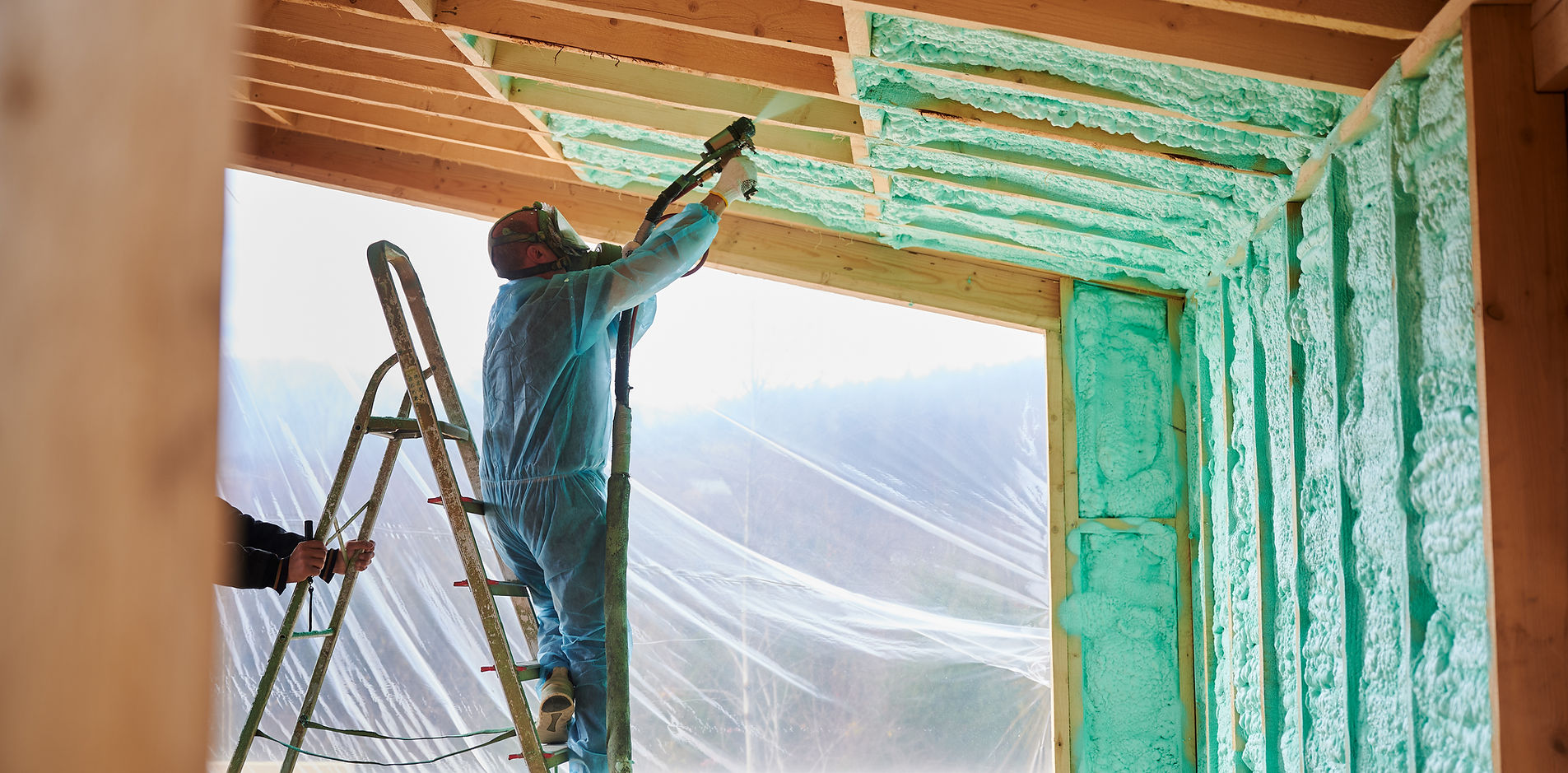
Average home values across the county sit above $700,000, and the spread matters: the high end commands premium pricing for high-performance envelope work, and the older housing stock in the Bridgeport-Stratford corridor commands real volume for full-home retrofits. For a spray foam operator, this is a market where the average job is bigger, the customer is more educated on energy performance, and the install window is year-round. There is no off-season here — winter rim-joist work in Bridgeport, summer attic conversions in Westport, pre-drywall new builds in Greenwich and New Canaan, all running on parallel pipelines.
The county's coastal exposure along Long Island Sound — Greenwich, Stamford, Norwalk, Fairfield, Bridgeport, Stratford, and Shelton — also drives storm-resilient, code-driven construction. IECC Climate Zone 5A puts the county in a cold-winter, warm-summer band where both heating and cooling loads matter, and where the building envelope is the load-bearing argument for higher R-value insulation.
Construction Industry & New Build
Connecticut's overall residential construction market runs steady rather than volatile. Per the U.S. Census Bureau's Building Permits Survey, the state has issued roughly 5,000 to 7,000 single-family permits per year in the recent cycle, and Fairfield County is a leading share of that activity. The county's high-end custom-home and addition market — Greenwich, Darien, New Canaan, Westport, Wilton — is a baseline business, not a boom-bust pattern. Builders in these towns know the difference between closed-cell spray foam on a cathedral ceiling and batt insulation, and they spec the upgrade when their client is paying attention to long-term energy costs.
Inside the county, the job mix is varied. Pre-drywall new builds for custom homebuilders in the Gold Coast. Whole-home retrofits on mid-century colonials in Fairfield, Easton, and Monroe. Urban infill and gut-rehab projects in Bridgeport and Stamford. Coastal storm retrofits and elevated new construction in the shoreline towns. Light-commercial and mixed-use in Stamford and Bridgeport downtowns. Suburban additions and bonus-room conversions in Trumbull, Shelton, and Ridgefield. The protected territory supports all of it without overlap from a second Liquid Green operator.
Industry estimates suggest a single-truck spray foam operation in this market can complete 12 to 20 jobs per month at scale, with a multi-truck or two-crew operation pushing higher — plan for a range, not a single date, because results vary by operator and market.
Energy Efficiency Tailwind
Connecticut's energy story is the reason the spray foam business works here. The state adopted the 2022 Connecticut State Building Code, effective October 1, 2022, which is one of the most aggressive residential energy codes in the country — based on the 2021 IECC with state-specific tightening on envelope performance, air sealing, and insulation R-values. New homes in Fairfield County are being built to a tighter envelope than at any prior point in the state's history.
The retrofit side is even bigger. Fairfield County has substantial pre-1970 housing stock — particularly in Bridgeport, Stratford, and the older sections of Stamford and Norwalk — that predates any meaningful insulation code. That stock is the long tail of demand: aging into retrofit eligibility, hit by rising energy costs, and increasingly aware of comfort and indoor-air-quality issues that good insulation solves. Add the utilities: Eversource administers the Connecticut Energy Efficiency Fund in this territory, paying direct rebates for insulation upgrades — including spray foam — when installed to program specifications. Those rebates stack with the federal 25E Energy Efficient Home Improvement Tax Credit, which (post-Inflation Reduction Act) credits homeowners for 30% of qualified insulation and air-sealing costs up to an annual cap.
For a Fairfield County operator, the math is straightforward: the codes are tightening, the utility is paying, the federal government is crediting, and the existing housing stock is aging into retrofit eligibility. Demand is structural, not cyclical.
Local Work & Jobs
The Fairfield County Liquid Green operator is a local business. The crew is hired from the county — applicators, crew leads, estimators, and operations support — and subcontracted labor in peak install season is drawn from the same regional pool. The operation works with local builders, general contractors, electricians, HVAC contractors, plumbers, and code officials across every town in the territory.
The work opportunity this creates is real and accessible. A spray foam branch does not require a four-year degree to enter. The 20-hour Liquid Green Spray Academy covers the technical side; the 1–2 week HQ onboarding at Brewster NY covers the operational side. No experience is required to start. What is required is showing up, learning the system, and earning the certifications the job demands.
Job creation scales with the operation. A single-county operator can support a small core crew of full-time employees — applicators, a crew lead, an estimator, and an operations support role — plus subcontracted labor during peak install season. As the pipeline grows, the operator can add trucks, add crews, and add capacity. The territory is sized to support that growth without bumping into another Liquid Green operator in the same county.
Investment & What's Included
The total startup investment for a Fairfield County Liquid Green franchise is $136,000 to $194,000. That range covers the mobile spray foam rig, proportioner and gun package, initial inventory of open-cell and closed-cell foam and coatings, branding and vehicle wrap, the 20-hour Liquid Green Spray Academy, 1–2 weeks of HQ onboarding at Brewster NY, CRM access, the operating playbook, and working capital for the first 90 days.
Treat the range as a planning benchmark, not a promise. Actual startup cost varies by rig configuration, territory footprint, and individual operator circumstances. Liquid Green's fee structure is transparent: no hidden marketing co-op deductions, no required national ad-spend tiers. The full Item 7 cost breakdown lives in the Franchise Kit.
Operators who want a wider footprint can apply for the multi-county Western Connecticut territory, which bundles Fairfield with Litchfield and New Haven into a three-county protected market. Either way, the FDD is shared after the discovery call. Got foam?
Fairfield County, CT — Common Questions
How much does a Liquid Green franchise cost in Fairfield County?
Initial investment is $136,000 to $194,000 all-in. That range covers the mobile spray foam rig, equipment, initial inventory, training, 1–2 week HQ onboarding in Brewster NY, brand assets, and working capital. Treat the range as a planning benchmark — actual startup cost varies by rig configuration, territory size, and operator circumstances. The full Item 7 lives in the Franchise Kit.
What does the Fairfield County CT territory include?
A single-county protected territory covering all of Fairfield County, Connecticut — Greenwich, Stamford, Norwalk, Bridgeport, Danbury, Fairfield, Westport, Darien, New Canaan, Ridgefield, Wilton, Trumbull, Stratford, and Shelton, plus the surrounding towns. The territory is yours alone; no other Liquid Green operator will be placed inside the county. Operators who want a wider footprint can also apply for the multi-county Western Connecticut territory that bundles Fairfield with Litchfield and New Haven.
Do I need construction or spray foam experience?
No. Most Liquid Green franchisees come from outside the trades — sales, military, manufacturing, HVAC, project management. The 20-hour Liquid Green Spray Academy covers the technical side, and the 1–2 week HQ onboarding in Brewster NY covers rig setup, scheduling, customer acquisition, and the first jobs. The operating system is the product, not just the foam.
What is the local construction market like in Fairfield County?
Fairfield County is Connecticut's most populous county — approximately 945,000 residents per the most recent U.S. Census estimate — with average home values around $700,000 and a deep pipeline of high-end custom homes, additions, and pre-war retrofits. The county's coastal exposure also drives storm-resilient and code-driven construction. Per the most recent CT Department of Labor data, construction is a steady employer in the region. Industry estimates peg spray foam demand in this market as year-round — there is no real off-season — and the market supports both new construction and retrofit at premium pricing.
What kind of jobs will a Fairfield County franchise create?
A Fairfield County Liquid Green operator hires locally — spray technicians, crew leads, estimators, and operations support — and subcontracts additional labor in peak install season. The franchise works with local builders, general contractors, electricians, plumbers, HVAC contractors, and code officials across Greenwich, Stamford, Norwalk, Bridgeport, Danbury, and the surrounding towns. Job creation scales with install volume and crew utilization; the operator can grow from a single-truck operation into a multi-crew regional platform over time.
Get the Franchise Kit
Investment details, training overview, territory map, sample economics, and the full FDD process — all in one kit. We'll send it within 24 hours.
Request the Franchise Kit Back to Western CT