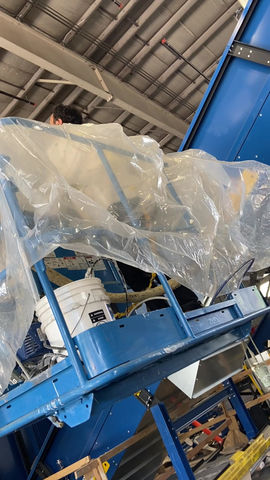
Brewster, NY — Operational Branch
The flagship Liquid Green HQ. A fully operating spray foam branch serving the Hudson Valley — and the reference model every new Liquid Green operator is trained on. Not for sale. Documented here so you can see what a working Liquid Green operation looks like.
Why Brewster Is a Strong Franchise Market
Brewster is a small village in Putnam County, NY, sitting on the I-84 corridor roughly sixty miles north of Manhattan. The village itself is small — population just over two thousand — but it functions as the commercial center of Putnam County and sits at the seam between three of New York's strongest residential construction markets: Putnam, southern Dutchess, and northern Westchester.
Putnam County's population is around 98,000 per the most recent U.S. Census estimate, with median household income well above the national average and a housing stock dominated by single-family homes built between the 1960s and the 2000s. That stock is aging into prime retrofit territory. To the north, southern Dutchess — Hopewell Junction, Poughkeepsie, Wappingers Falls — adds a deep pool of pre-1970 homes that are under-insulated by current standards. To the south, northern Westchester towns like Katonah, Somers, and Yorktown drive consistent high-end new construction.
For a working spray foam branch, this geography is ideal. Drive times inside the protected zone stay manageable. Crews are home most nights. Material logistics work. The Brewster branch was placed here on purpose — to be the proof point for the rest of the system.
Construction Industry & New Build
New York State issues roughly 50,000 to 60,000 residential building permits per year in a typical cycle, per the U.S. Census Bureau's Building Permits Survey. The Hudson Valley counties — Putnam, Dutchess, Orange, Rockland, Ulster, Sullivan — together represent a meaningful slice of that activity, and within them, custom-home and high-end addition work is a steady baseline rather than a boom-bust pattern. Brewster sits in the middle of that pattern.
The branch's typical job mix reflects that. Pre-drywall new builds for local builders, full attic and rim-joist retrofits on existing homes, barn and outbuilding conversions in the rural parts of the county, additions, and selective light-commercial work. Builders in this market know the difference between fiberglass batts and closed-cell spray foam on a cathedral ceiling — and they spec the upgrade when their client is paying attention to energy bills.
What the Brewster branch demonstrates to new operators is the rhythm of a working week: estimate on Monday, install Tuesday through Thursday, follow-up and Friday estimates, weekend admin. Crew utilization matters more than headline job count. Industry estimates suggest a well-run two-truck spray foam operation can complete 12 to 20 jobs per month at scale, depending on job size — plan for a range, not a single date, because results vary by operator and market.
Energy Efficiency Tailwind
New York is one of the most energy-code-aggressive states in the country. The 2020 New York State Energy Conservation Construction Code (based on the 2018 IECC) raised wall and ceiling R-value requirements substantially compared to the prior code cycle, and the trajectory is one-way: each code update tightens the envelope. Brewster and the surrounding counties sit in IECC Climate Zone 5A — cold winters, warm summers, both heating and cooling loads matter.
Closed-cell spray foam at R-6 to R-7 per inch and open-cell at roughly R-3.5 per inch solve problems that fiberglass simply can't. Cathedral ceilings, rim joists, basement walls, attic roofs, and bonus-room over-garage conversions are the bread-and-butter applications. New York State Energy Research and Development Authority (NYSERDA) programs — including the Home Energy Rebates program funded through the federal Inflation Reduction Act — put real money back in the homeowner's pocket for insulation upgrades, often stacking with the federal 25E Energy Efficient Home Improvement Tax Credit.
For a homeowner in Brewster, a typical attic and rim-joist spray foam package delivers measureable heating-cost reduction. For the operator, the value is structural: the demand for higher-R-value insulation isn't a fad that turns over with the economy. Codes tighten, energy costs trend up, and existing housing stock ages into retrofit eligibility. That tailwind is what makes a spray foam branch a real business, not a discretionary service.
Local Work & Jobs
The Brewster branch is a local business in the truest sense. The crew is hired from Putnam and Dutchess counties. The trucks are wrapped and parked at the school, the grocery store, and the post office. The branch works with local builders, local electricians, local HVAC contractors, and local code officials. Subcontracted help during peak install season comes from the same labor pool. Money spent on the branch cycles through the local economy — payroll, materials, vehicle fuel, insurance, and the small-business services that every operation needs.
A working branch of this size typically supports a small core crew of full-time employees — applicators, a crew lead, an estimator, and an operations support role — plus per-diem subcontracted labor during spring and fall peaks. The branch is the kind of work opportunity that doesn't require a four-year degree; it requires showing up, learning the system, and earning the certifications. No experience is required to enter the program; the 20-hour Liquid Green Spray Academy covers the technical side, and the 1–2 week HQ onboarding in Brewster itself covers the operational side.
For a community like Brewster, that's meaningful. The branch is a hometown business that hires locally, trains locally, and serves locally. The work — schools, homes, businesses, barns, additions, retrofits — is visible in the community every week.
Investment & What's Included
The Brewster branch is the reference model. To operate a similar branch in your own protected territory, the total startup investment runs from $136,000 to $194,000. That range covers the mobile spray foam rig, proportioner and gun package, initial inventory of open-cell and closed-cell foam and coatings, branding and vehicle wrap, the 20-hour Liquid Green Spray Academy, 1–2 weeks of HQ onboarding in Brewster, CRM access, the operating playbook, and working capital for the first 90 days.
Treat that range as a planning benchmark, not a promise. Actual startup cost varies by rig configuration (single truck vs. two-truck), territory size, and individual operator circumstances. Liquid Green's fee structure is transparent: no hidden marketing co-op deductions, no required national ad-spend tiers. The full Item 7 cost breakdown lives in the Franchise Kit.
If you want to see what a working branch looks like in person before you sign anything, that's exactly what the Brewster reference branch is for. The full FDD is shared after the discovery call. Got foam?
Brewster, NY — Common Questions
What is the Liquid Green Brewster NY branch?
The Brewster NY branch is the fully operational flagship of the Liquid Green franchise system. It is not for sale. It is the reference model — the working operation that new franchisees train at, observe, and replicate in their own protected territory. The branch serves Putnam County, Dutchess County, and northern Westchester from its 473 Rt 164 headquarters.
What kind of work does the Brewster branch do?
Local work — residential and light-commercial spray foam insulation. New construction, attic and rim-joist retrofits, barns and outbuildings, pole barns, additions, and pre-drywall applications. The Brewster branch covers Putnam, southern Dutchess, and the northern Westchester corridor including Mahopac, Carmel, Patterson, Hopewell Junction, Poughkeepsie, Katonah, and Yorktown.
Can I buy the Brewster branch?
No. The Brewster branch is owned and operated by Liquid Green as the system headquarters and training site. It is documented here so prospective franchisees can see what a working Liquid Green operation looks like in practice. Operators purchase a separate protected territory — the Brewster playbook, but not the Brewster branch.
How much would it cost to operate a similar branch in my market?
A new Liquid Green operator launches a similar branch in their own protected territory for an initial investment between $136,000 and $194,000. That figure covers the mobile spray foam rig, equipment, initial inventory, training, 1–2 week HQ onboarding at Brewster, brand assets, and working capital. Treat the range as a planning benchmark — actual startup cost varies by rig configuration, territory size, and operator circumstances. See the Franchise Kit for the full Item 7.
What kind of jobs does the Brewster branch create locally?
The Brewster branch hires locally — spray technicians, crew leads, estimators, and operations support. The branch works with local builders, general contractors, electricians, plumbers, HVAC contractors, and code officials. A branch of this size typically supports a small crew of full-time employees plus subcontracted labor during peak install season. Job creation scales with install volume and crew utilization.
Get the Franchise Kit
Investment details, training overview, territory map, sample economics, and the full FDD process — all in one kit. We'll send it within 24 hours.
Request the Franchise Kit Back to Opportunities